


What syringes are used for insulin is answered by the concentration scale, barrel capacity, markings and needle details stated on the product record. This guide shows you how to compare those fields, separate insulin-specific information from general injection listings, and identify when a catalogue page does not provide enough detail.
What syringes are used for insulin?
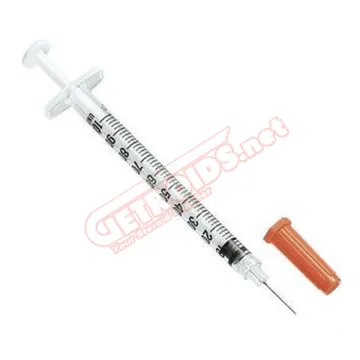
Insulin is commonly associated with insulin syringes that use a stated concentration scale and small-volume barrel markings. The relevant record should identify the syringe type, the scale printed on the barrel, the capacity and the supplied needle details. A small syringe is not automatically an insulin syringe, and a product photograph is not enough to establish suitability.
For an online shopper, the first step is to read the listing as a set of separate facts. Note the exact product title, concentration wording, capacity, unit markings, needle specification and package presentation. If the page calls the item only an “injection syringe,” the record may describe a general device rather than an insulin-specific product.
Start with the syringe identity
A precise product title should tell you whether the record concerns an insulin syringe, a general-purpose syringe or another injection accessory. The word “syringe” by itself does not identify the scale or intended product category.
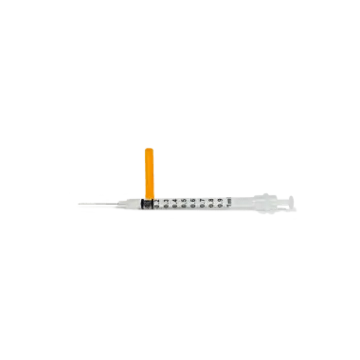
Do not infer the identity from a familiar shape. Two syringes can look similar while using different barrel markings, capacities or needle configurations. Product images can support your review, but the written specification should carry the comparison.
Treat capacity as one field, not the whole answer
Capacity describes the maximum volume the barrel can hold. It can help you compare listings designed around smaller or larger measured volumes, but it does not establish which concentration system the syringe uses.
A listing that shows only capacity leaves important questions open. You still need to find the concentration scale, the units printed on the barrel and the needle information. If those details are absent, record the field as not stated.
- Product title
- concentration scale
- barrel capacity and markings
- needle details
- package and documentation review
How do concentration scales and barrel markings fit together?
The concentration scale is one of the most important fields in an insulin-syringe listing. Labels such as U-100 or U-40 describe the scale associated with the insulin presentation and the markings used on the syringe. The scale should be read from the record rather than guessed from the syringe size.
Compare the stated scale with the insulin presentation
Write down the exact concentration wording shown for the insulin presentation, then compare it with the scale stated for the syringe. A capacity label tells you how much the barrel can hold; it does not replace the concentration information.
When the page does not identify the scale, do not assume U-100, U-40 or another system because the title includes the word “insulin.” A complete comparison requires the published wording from the seller, manufacturer or relevant product documentation.
Do not convert missing information into dosage advice
This type of product research is about identifying and comparing catalogue information. It is not a basis for creating personal dosing instructions or deciding which syringe a particular person should use.
If the insulin presentation and syringe record do not clearly describe matching scales, pause the comparison and ask a qualified healthcare professional or the responsible manufacturer to clarify the product information. Keep the question focused on the exact label and record you are reviewing.
Separate scale, capacity and markings
These terms are related but not interchangeable:
| Listing field | What it tells you |
|---|---|
| Concentration scale | The stated system associated with the syringe markings |
| Barrel capacity | The maximum volume shown for the syringe |
| Unit markings | How the barrel is divided and labelled |
| Needle gauge | The stated needle thickness specification |
| Needle length | The stated needle length specification |
| Package presentation | Quantity, attachment and other included-item details |
A useful product comparison copies each field exactly. That habit prevents a capacity number from being mistaken for a concentration label.
Which needle details should an insulin syringe listing show?
Needle information helps distinguish otherwise similar syringe records. Gauge and length are separate specifications, and a useful listing should identify both when they apply. The record should also state whether the needle is attached, detachable or not included.
Read gauge and length separately
Gauge describes the needle diameter convention used in the product record. Length describes how long the needle is. Neither field replaces the concentration scale printed on the barrel.
If a page states a gauge but not a length, mark the length as unknown. If it provides a length but omits gauge, do the same for gauge. Avoid filling either gap from a package photograph, because the image may not show the relevant text clearly.
Check the needle arrangement
A syringe record may describe an attached needle, a removable needle or a syringe supplied without a needle. That detail affects how you compare the package, especially when two pages show similar barrel sizes but different included components.
Look for exact wording such as “needle included,” “attached needle” or “detachable.” If the listing does not say, do not present the package as containing a particular needle configuration.
A record-reading sequence
- Copy the stated syringe type.
- Copy the concentration scale and barrel units.
- Record the capacity exactly as published.
- Note needle gauge, length and attachment status.
- Check the package quantity and any documentation tied to the same record.
- Ask the responsible supplier or a qualified healthcare professional about unresolved suitability questions.
This sequence helps you compare product data without turning a catalogue page into a treatment or dosage guide.
How should you compare online insulin syringe listings?
An online listing is useful when it gives you enough concrete information to distinguish one record from another. Begin with identity, then check specifications, presentation and documentation. Do not let a broad title or search snippet stand in for a complete product record.
Check the title, brand and manufacturer
The title should identify the product as precisely as possible. Where available, record the brand and manufacturer separately. Sterolix product pages may show brand and producer information when it exists in the relevant catalogue record, but those fields do not by themselves prove medical suitability.
A brand name can help you distinguish two listings, while the manufacturer field may identify the producer shown by the store. Keep both fields tied to the exact record you reviewed instead of transferring them to another product with a similar name.
Review presentation details
Package quantity, vial volume, tablet count and other presentation fields may appear on Sterolix records when relevant to the product. For a syringe listing, look for package quantity, individual or boxed presentation, needle inclusion and any stated packaging description.
Do not assume that a photograph showing several syringes proves that the advertised package contains that number. Use the written package field or documentation supplied with the record.
Use documentation in its proper scope
Some product records may include batch information, laboratory reports or manufacturer verification sources when available. Such material is limited to the named product, sample, batch or report. It should be read as documentation attached to that record, not as a general statement about every item in a brand or category.
A laboratory report or manufacturer verification source is not a guarantee of safety, effectiveness, treatment suitability or legal status. It also does not validate a syringe for insulin when the document concerns a steroid, peptide or another compound.
For a broader method, read the guide to responsible syringe listings. If you are comparing several pages side by side, the syringe buying comparison method provides a useful record-by-record structure.
Does Sterolix list insulin syringes?
The supplied Sterolix catalogue facts do not confirm a dedicated insulin-syringe category. Sterolix is positioned around anabolic-androgenic steroids and related compounds, with product groups that include injection products, oral products, peptides and other listed compounds.
That distinction matters because shoppers often search by intended use while a catalogue may be organised by compound, formulation, concentration, brand, producer or presentation. An injectable compound listing is not automatically a listing for the syringe used with insulin.
Keep compound records separate from device records
A compound page may describe the compound, formulation, concentration, brand and presentation. A syringe page should describe the device itself, including its scale, capacity, markings and needle information.
Do not use a product record for testosterone, nandrolone, boldenone, trenbolone, stanozolol, metenolone or another listed compound as evidence that a syringe is intended for insulin. The record categories answer different questions.
Consider shipment and destination details separately
Sterolix may use labels such as USA Domestic and International Shipment. Availability, permitted destinations, fulfilment options and shipping methods can vary by product and destination. Applicable information is shown during the ordering process.
A shipment label does not establish that every country is served or that every product is available everywhere. Product status, import requirements and applicable regulations can differ by jurisdiction, so keep those questions separate from syringe specification research.
Use the related insulin guide for label questions
The insulin syringe usage and listing guide covers related questions about reading syringe labels and product descriptions. The complete Sterolix guide collection provides additional material on brands, documentation, presentations and catalogue comparisons.
What does “steroxxe” mean in an insulin syringe search?
The term “steroxxe” is not identified in the supplied site facts as a brand, product, compound or syringe type. Treat it as an unresolved search phrase until an exact catalogue record provides a verified identity and supporting details.
Verify unfamiliar terms before connecting them to a product
A search phrase can be a spelling variation, an outside brand reference or a combination of unrelated subjects. Without a matching record, you cannot assign it a manufacturer, formulation, concentration, package size or intended use.
Search the catalogue for an exact match, then compare the result with the title, brand field, producer field and documentation. If no record explains the term, keep it separate from insulin-syringe research.
Avoid conclusions based on similar names
Do not assume that “steroxxe” refers to Sterolix, an insulin-syringe brand or an injectable compound. Similar spellings can point to different products, and the available catalogue facts do not connect this term to a specific item.
When a related result appears, inspect the complete record rather than relying on a short title or search snippet. Confirm the exact identity before using the page in a comparison.
When is an insulin syringe listing too incomplete to compare?
A listing is incomplete for comparison when it omits the concentration scale, capacity, barrel markings, needle details or package information needed to identify the item. It may still serve as a lead, but it should not be presented as a confirmed insulin-syringe option.
Mark missing fields clearly
Use a simple status for each field:
- Stated: the record gives the exact information.
- Not stated: the page does not provide the information.
- Needs verification: the wording is unclear or conflicts with another part of the record.
This approach is especially useful when you have several product tabs open. It keeps a familiar-looking title from outweighing missing specifications.
Know what the product record cannot answer
A catalogue page can help identify the listed item and compare its published specifications. It cannot replace medical advice, personalised treatment guidance, dosing instructions or a professional suitability assessment.
If the page does not clearly identify an insulin syringe and a matching scale, do not treat it as a confirmed answer to the search. Ask the relevant supplier, manufacturer or qualified healthcare professional about the unresolved information.
How can you finish a clear product comparison?
Finish by separating confirmed facts from open questions. For each listing, write down the syringe type, concentration scale, capacity, barrel markings, needle gauge, needle length, attachment status, package quantity, brand, manufacturer and available documentation.
Then compare like with like. A record with a stated U-100 scale should not be placed in the same category as a record that merely says “small syringe.” A page with a needle gauge but no concentration information is also not equivalent to a complete insulin-syringe listing.
The goal is not to create a recommendation from incomplete data. The goal is to identify the exact product record, understand what it states and decide which questions still require verification. That method is more reliable for store owners, developers and shoppers reviewing catalogue pages with different levels of detail.
A careful searcher can now distinguish an insulin-specific syringe record from a general injection listing, compare concentration scales with the published insulin information and avoid treating unrelated compound pages as device records. When the page is incomplete, the correct next step is verification—not an assumption based on the photograph or keyword.
Frequently asked questions
What syringes are used for insulin?
Insulin is commonly associated with insulin syringes that state a concentration scale, such as U-100 or U-40, together with barrel capacity and needle details. The relevant record should match the scale shown for the insulin presentation and identify the device clearly.
What does U-100 mean on an insulin syringe?
U-100 identifies a concentration system associated with the insulin presentation and the corresponding syringe scale. A product record should state the scale clearly; do not infer it from a small barrel or from the word “insulin” alone.
Does a smaller syringe automatically suit insulin?
No. Capacity is only one product attribute. You should also check the concentration scale, barrel markings, needle gauge, needle length, attachment status and the exact wording supplied by the seller or manufacturer.
What needle details should an insulin syringe listing show?
A useful listing identifies needle gauge and length and explains whether the needle is attached, detachable or not included. If these fields are missing, the page does not provide a complete basis for comparing the device.
Does Sterolix list insulin syringes?
The supplied site facts describe Sterolix as a catalogue focused on anabolic-androgenic steroids, related compounds, injection products, oral products and peptides. They do not confirm a dedicated insulin-syringe category, so an injection listing should not be treated as insulin-specific without explicit wording.
What is steroxxe?
The supplied catalogue facts do not identify Steroxxe as a product, brand, compound or syringe type. Treat it as an unresolved search phrase until an exact product record provides a verified identity and supporting details.
Comments and Ratings
No comments yet. Be the first to share your view.